I was listening to a news report the other day about Washington state's child welfare system. They were interviewing a guy who works for the department that is responsible for children and families caught up in the foster care/adoption/preservation system. He was talking about the fact that the state of Washington now realizes that it's better to keep families together, if at all possible. Hallelujah, someone besides us has figured that out. The interviewer asked him why he thinks state and local departments are so quick to rip children away from their biological parents. He responded, "Fear." He admitted that no one wants to make the mistake of leaving a child in a truly dangerous home. He noted, however, that in 90% of the reported cases, children are taken away from their parents for issues related to poverty or general lack of parenting skills. Understanding this, the state of Washington has changed the role of social workers from that of gate keeper and watch dog to parent coach and supportive ally. Moreover, the state is shifting the resources from foster parenting to helping preserve the biological family. I wanted to cry; this is exactly what they should be doing. Because guess what, it's hard on children to break the bond they have with their biological families. It hurts, it's painful; it creates trust issues and unnecessary insecurities that were never present before the system intervened.
Not to mention, what happens to the millions of children who end up in foster care? The reality is that there are so few of us who really give a damn about them, who even give these innocent, young children a second thought. And while it would be nice to think that all of us become adoptive parents because we have always longed to be viewed as society's second class parents, the reality is that many of us chose to adopt out of a sense of obligation, a strong belief that we should give a shit about these kids. We care, and we can't stand the idea that there are children facing the world alone. People like us adopt everything: causes, cats, you name it. We have this internal voice that is constantly harassing, do more, be more, not enough. Let's be real, we're just special people. And while we're awesome, there are not enough of us to adopt every single child who the state has shoved into foster care.
The guy suggested that about 10% of children legitimately cannot be reunified with their biological parents. He acknowledged that for those children, the system needs to do a better job of identifying them when they are much younger. Additionally, he said that as soon as the state has identified the child, an adoptive home needs to be secured sooner than later. Of course, this would not be nearly as difficult were there less children unnecessarily languishing in the system. The employee went on to admit that finding adoptive homes for teenagers is extremely challenging. He noted that this is undoubtedly related to the fact that adopting teenagers is very difficult, for everyone. The teenager's biological clock is telling him or her to establish independence at the same time that the adoptive family is trying to bond. This is complicated on so many levels. Listening to him speak this truth, I almost started crying.
Yes, news flash, it's very hard to bond with teenagers. Teenagers by nature can't stand their parents. If they don't, there is likely something wrong with them. Like my mother has professed to have felt about me when I was a teenager, I wanted Malcolm and Mychael to establish their independence from me and to want to leave one day. Isn't that most parents' dream? But, the signals get so confusing when it happens at the same time that you are trying to form a permanent bond as a family. "Leave me alone, I can't stand it here, I can't wait to leave." How many times did we tell our parents this? Yet, when it comes from the mouth of a teenager who has just been adopted, it feels so different. The parents perceive the sentiments as rejection of them and the adoptive family. Meanwhile, the children are confused because while they want to be part of the family, they also want their parents to butt out and go away. In the end, everyone feels bad, like it's not working, like they messed up. And that sucks because it's all so normal!
The other day I was talking with Malcolm, who admittedly is struggling a little and who likely is doing so as a result of issues related to him not initially living the American dream. Yes, okay, we aren't perfect. We're still awesome, but we have issues. And no those issues do not justify us being considered second class, damaged family members. Anyway, Malcolm was talking about being depressed and his low self esteem issues. I can't remember exactly what preceded his comment, but I do remember what he said next, "Whenever I pull away or don't want to talk to anyone, it's not because I'm rejecting you or our family." I told him I knew that because in my heart I do. But, that's because it's been 18 years, and we have lived a lot of life, I mean A LOT OF LIFE since then.
I remember that when I first adopted the kids, I wasn't so sure that they wanted to be a part of our family; I didn't appreciate the complexity of the situation. In retrospect, I know that whether I chose to admit it at the time, I often felt insecure. And unfortunately, those insecurities likely influenced some of my parenting strategies. "You see in others what you see in yourself," my mom likes to say. That is the truth. It's important to keep our insecurities in check and appreciate how they influence what we think is happening within our family. It's hard though because emotions are so powerful. Talk to your kids about how you are feeling because they are likely feeling the same way and will be relieved that there is a reason for it. Use this experience as a means to bond; we're in this fight together. Whatever you do, don't give up. When your emotions are trying to get the best of you, rely on what you know versus how you feel. Eventually the two will come together.


8.08.2013
Come Home Soon Malc!
Someone asked what was up with Malcolm. Well, I've been holding that information protectively because he's my little boy (who is turning 25 years old next month), and he is in Afghanistan, and that freaks me out. Yet, words truly cannot express how impressed and proud I feel when thinking and talking about my Malc. Instead of continuing to ask me to pay for his school, he decided that he wanted to be independent. He saw joining the military as a way to accomplish that goal. NOT the way I wanted him to accomplish it, but he made that decision on his own. I would gladly have found a way to pay for him versus having him go to Afghanistan, but he wanted to be independent and handle things on his own. Every time I talk to him, I'm am in awe of how much my little Malc has grown up. He is truly becoming an amazingly compassionate, insightful and strong young man. He will be home in November and WE CANNOT WAIT! He's proven himself to be much braver than I have ever been. So proud of him!
Here is a photo of him with his girlfriend. I cannot believe how awesome the women are that my sons have in their lives. I know a lot of normal families, and their sons don't have girlfriends even half as awesome as my sons'. Did I mention Malc's girlfriend is adopted? Does it get any better than that? Oh yes, keeping it as far from normal as possible! Just how we like it. This is what a real family looks like.

Here is a photo of him with his girlfriend. I cannot believe how awesome the women are that my sons have in their lives. I know a lot of normal families, and their sons don't have girlfriends even half as awesome as my sons'. Did I mention Malc's girlfriend is adopted? Does it get any better than that? Oh yes, keeping it as far from normal as possible! Just how we like it. This is what a real family looks like.

8.03.2012
Stanley Gets Married!

12.30.2011
Waiting For That Perfect Ending

I have been waiting for that perfect ending in order to finish the adoption book that I started so many years ago. Things haven't turned out exactly as I'd planned and so I have waited. Currently, my sons are still finishing up college, with Malcolm having just over 30 credits and Mychael having sixteen credits to complete before earning their bachelor's degrees. In my mind, I have always viewed earning these degrees as the end goal. In retrospect, I'm not exactly sure why I thought a college degree would be the ultimate sign of success. Can I say they have been successful despite not having their degrees in hand?
Since graduating from high school, my sons have had many accomplishments along the way, accomplishments that I likely overlooked because they were intermixed with struggle. My kids were set up from day one to struggle, so why didn't I anticipate that they would, in fact, struggle? And if I wanted normal, I should have chosen the boring route, the path of the weaker ones--the biological ones :) I think it's harder for adoptive families to have setbacks because we are expected to fail and so we always feel like we have something to prove. I have never wanted people to know when my children struggle because I assume that they will think, "Yeah, we knew you couldn't make it." As a result, I always try to act as though everything is always wonderful. I'm not allowed to be upset because if I am, then I'll have admitted that they were right.
I have a few non-adoptive friends that I know see adoptive families as being just as legitimate as biological families, and as such, I feel safe confiding in them. Sometimes when I'm really stressed, I'll complain about something and they will say, "Are you kidding? I feel like that with my kids, and I gave birth to them!" I know my love for my children is as real any parents' love for their children. However, it feels good to know that it's okay to have times when I feel doubt, regret or frustration. You mean all parents sometimes fantasize about what life would have been like had they not had kids? Are you telling me that all parents have moments when they wish they could quit? Wait, and you can have all these feelings while simultaneously loving your children more than anything in the world? What? If it's hard for biological parents to admit this without feeling guilty, then it's next to impossible for adoptive parents.
Sometimes I get so tired of fighting against stereotypes and prejudices in order to just be viewed as a regular old family. Some days I just want to hate my role and not feel as though I'm letting down an entire population of people in doing so. I'm sick of always having to be better than normal just because society can't seem to wrap themselves around this notion that sharing superficial things like pigment, history and even DNA is not a pre-requisite to unconditional love and commitment. Imagine that, normal people, we adoptive families love, sacrifice and remain committed when confronted with "normal" family challenges even though we don't all necessarily look the same! Aren't we cosmopolitan!
Recently, I was talking to Malcolm about the fact that he is allowed to take steps in life at the pace in which he feels most comfortable. While he didn't necessarily take the exact route I would have taken, we haven't exactly had the same early experiences. And wasn't I the one advocating that my children be allowed to have control in their lives? Shouldn't I be okay with the fact that they are exercising their right to call the shots on their terms? Only recently have I humbly realized that this also includes me not getting to call the shots. It's hard to be a young person trying to establish oneself in the adult world. My role is to support my sons' efforts to do this effectively.
So why does the perfect ending mean that at age 22, they would have already graduated from college and be working in the post-graduate workforce? I think the answer to that has a lot more to do with me than it does with them. While I might always feel like we have something to prove to the society, my sons just want to be allowed to be themselves and to be accepted 100% for the choices that they make, even if they don't necessarily coincide with what everyone else thinks they should be doing. If I remember correctly, I'm pretty sure I felt the same way when I was their ages. Hmm, this all sounds so familiar, so normal. I guess I'm still learning, and whether I like it or not, they are still teaching.
7.06.2011
It's Been Too Long!
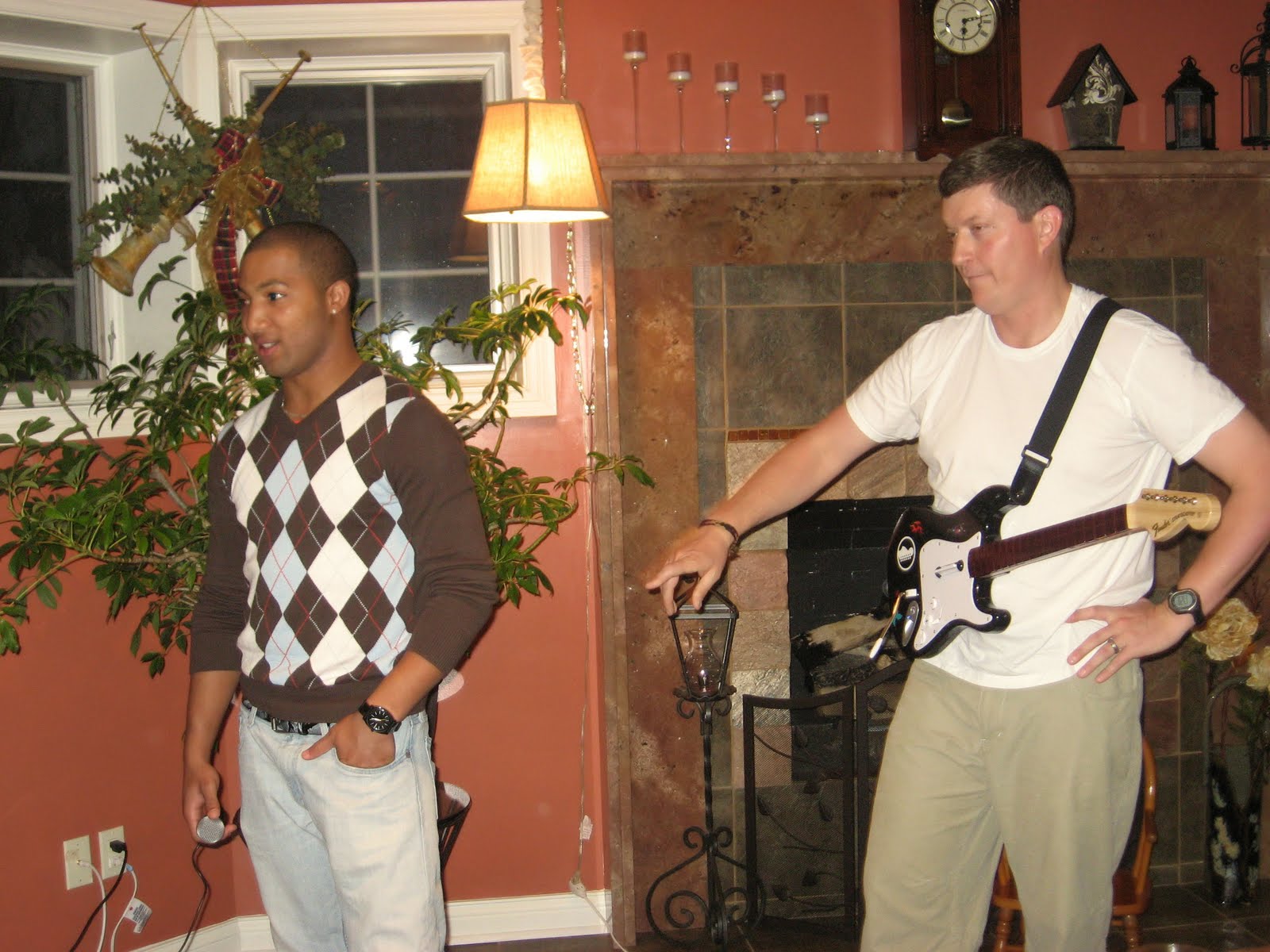


First off, let me say thanks for the emails, and yes, we're still alive! It's been a super busy last year. I've actually been trying to get some of my own things going after many years of only focussing on Mychael and Malcolm. All parents know what that's like. It's been a tough couple years for Mychael and Malcolm. They have struggled with figuring out what they want to do with their lives. I think that's normal for all young adults. However, I think it's even more difficult for people who were older when they were adopted. Early adulthood is all about figuring out who you are and what you want to do with your life. I think that a lot of older adoptees get stuck on that "who you are" part.
That said, I believe that they are finally finding peace with themselves and their future paths seem to be opening up for them. Frankly, I'm still looking for my future path, so I'm not all that concerned that they have been, too. In the coming months, I'm going to post some direct correspondence from them. I think it's time for them to give their side of the story. In fact, I think it would be therapeutic to do so.
In terms of the book, I have yet to finish it. I've been waiting for that "happily ever after" ending. (You know what I mean, the final chapter that explains how everything went perfect and we ended up exactly where we thought we would.) Then one day recently I realized that I'm not even sure what that ending looks like. Is it the ending in which both my sons are college graduates, financially established and professionally employed? Is it when my sons are happy, content, in good relationships and in general at peace with themselves? Can you have all those things at once (I know this biological child hasn't)? I finally decided that "happily ever after" really means "okay with how things are going and optimistic about the future". In that case, I guess we're there.
That said, I guess I'll be wrapping up the book (finally). I decided that I'll end the book by interviewing my kids. Again, therapeutic for them and informative and helpful to anyone, especially families, fortunate enough to be in the presence of an adopted child or adult. Anyone have something they'd like to ask? Email me or leave a note on the blog, and I'll be sure to include it. I hope all of you amazing people are still being the incredibly wonderful humans that you are. I'm so thankful for adoptive families. Every time I meet an adoptee or adopter, I feel such a strong bond. I feel connected in a way that I simply cannot have with biological families. I had that experience lately and it reminded me how much I treasure adoptive families. Because seriously, we are the best...so normal!
Here we are talking a walk.
9.12.2010
Happy 22 Malcolm!
Malcolm turned the big 22 on Friday...he's getting all grown up!

I just wanted to acknowledge that it's been a while since I've written. To say the least, I have gotten away from the blog for quite some time. I was overwhelmed with self imposed challenges, and didn't have the emotional energy to put myself out there. Specifically, I picked up where I left off, career wise, when I adopted the kids many years ago, and doing so had consequences. I'm learning how to find the balance between being Gretchan and being Mychael and Malcolm's Mom. I read something one time in which Moms were asked to describe the emotions that they often experienced as Mothers. One word was consistently repeated by all the women--Guilt. Mom's overwhelmingly feel guilty when they focus on anything other than their children. We feel guilty about everything. When our children suffer, we feel as though we somehow inadvertently caused it. When they fail, we wonder what we should have done differently. When they hurt, we hurt. It's hard to find that balance.
For most of us, parenting means that you are ready to sacrifice just about everything (including your sanity) for the sake of your kids. Parenting is the hardest job in the entire world. You don't get a minute off, and this notion that once your kids become adults, you're off the hook is delusional at best. People warned me about the intensity of this whole parent thing, but I didn't listen. I was naive. And thank God for that. And by the way, are these sentiments enough to prove that I'm worthy of being perceived as a real Mother? Are these emotions genuine enough that people might actually refer to my children as my real kids? Am I legitimate now? Nah, but whatever. You can't have it all.
Regardless, we hit a few speed bumps over the last year. Yet, we pulled through...are pulling through just like we always do. And in the end, I have no doubt that we'll say that we're better people for having been forced down the alternate path yet again. But whatever, I'm not sure if I'd even recognize the regular route anyway. My normal is the alternate route. Sure, sometimes you dream of taking the easy route--to just for once have the opportunity for things to just work out the first time you try, and for everyone to just do their part. Yet, for may of us, it's not who we are.
When you get through the stress and start to see light at the end of the tunnel, you once again convince yourself that you didn't want it to be easy anyway. Soldiers like us can't survive when it's too easy. We get soft and weak. It's survival of the fittest and we are the survivors. Darwin says that the strongest are those that prevail in the face of the most adversity. So, bring it.

I just wanted to acknowledge that it's been a while since I've written. To say the least, I have gotten away from the blog for quite some time. I was overwhelmed with self imposed challenges, and didn't have the emotional energy to put myself out there. Specifically, I picked up where I left off, career wise, when I adopted the kids many years ago, and doing so had consequences. I'm learning how to find the balance between being Gretchan and being Mychael and Malcolm's Mom. I read something one time in which Moms were asked to describe the emotions that they often experienced as Mothers. One word was consistently repeated by all the women--Guilt. Mom's overwhelmingly feel guilty when they focus on anything other than their children. We feel guilty about everything. When our children suffer, we feel as though we somehow inadvertently caused it. When they fail, we wonder what we should have done differently. When they hurt, we hurt. It's hard to find that balance.
For most of us, parenting means that you are ready to sacrifice just about everything (including your sanity) for the sake of your kids. Parenting is the hardest job in the entire world. You don't get a minute off, and this notion that once your kids become adults, you're off the hook is delusional at best. People warned me about the intensity of this whole parent thing, but I didn't listen. I was naive. And thank God for that. And by the way, are these sentiments enough to prove that I'm worthy of being perceived as a real Mother? Are these emotions genuine enough that people might actually refer to my children as my real kids? Am I legitimate now? Nah, but whatever. You can't have it all.
Regardless, we hit a few speed bumps over the last year. Yet, we pulled through...are pulling through just like we always do. And in the end, I have no doubt that we'll say that we're better people for having been forced down the alternate path yet again. But whatever, I'm not sure if I'd even recognize the regular route anyway. My normal is the alternate route. Sure, sometimes you dream of taking the easy route--to just for once have the opportunity for things to just work out the first time you try, and for everyone to just do their part. Yet, for may of us, it's not who we are.
When you get through the stress and start to see light at the end of the tunnel, you once again convince yourself that you didn't want it to be easy anyway. Soldiers like us can't survive when it's too easy. We get soft and weak. It's survival of the fittest and we are the survivors. Darwin says that the strongest are those that prevail in the face of the most adversity. So, bring it.
9.11.2010
From Mom To You

The other day my oldest son Mychael said, "Why haven't you been writing on the blog?" I was really surprised that he had been following it. Frankly, the lack of enthusiasm he demonstrated when I originally told both Mychael and Malcolm about it led me to think that this blog was the least of their concerns. Yet, apparently I was wrong, so if you are reading this, Skippy, I'm writing this entry just for you.
I know you didn't ask me to say this, and I am not overanalyzing! I was just thinking, and I have a couple things I want to make sure that you know. In fact, I know you know it, but I just want to say it out loud in case you ever forget. I know it's been a little different over the past year due to the fact that we're in different places. However, despite the fact that I moved and after ten years, I have taken some time to focus on my career, you should know that the sun continues to rise and set on our little family. There are a few things in this world that you can always count on, and this family is one of them. It's hard making that emotional transition from being at home to being on your own. We worry that people will forget about us when we're gone. We worry that somehow things will change and not be the way they were before. We worry that leaving somehow means the end, instead of the beginning.
Yet, even though I know you know this, I just want to say that moving forward doesn't mean that we leave our family behind. Instead, we go out and face the world knowing that our family always has our back. Our family is always in the background cheering for each other. Whenever we feel nervous or scared, we can just turn around and know we'll still be there. Even if every person and everything we encounter in our new path is rotten, we will be able to cope with it because we always have each other. A family is still a family even when they are not together. We are still a family when one person lives on one coast and the other lives on another. The bond of a family is never broken.
So, in your new adventures...in my new adventures, and in the new adventures of all Team Thompson, we find comfort knowing some things never change. No matter where we are, we know that I'm still clearing my throat while being obsessive about something; you, Jay and Shawn are still being sensitive about most everything; Malcolm is still trying to escape in order to hang out with friends; Mamaw is still trying to hold everyone and everything together; Paul is still relaxing on the perimeter and trying to stay awake; Maudie Moo is still laying down in the middle of it; Esther Sue is still hiding; Alysia is still trying to make it all fit in a neat box; Grandma T. is still perfectly wonderful; Joe is still talking about how its all a conspiracy; Grandpa is still trying to avoid conflict and Grandma Jill is still...well, you know, Grandma Jill.
So, we should not worry that leaving means things will change. In fact, it's September, and we know what that means: Purdue Football. So, here's to another season of watching our faithful Boilers blow the lead in the final minutes of the game. And yet, we still love them, right? Because at least we always know what to expect and that has to count for something.
Love you little pumpkin head,
Mom
Purdue Boilermakers...

Two sensitive guys...

Team Thompson's newest Boilers...

5.11.2009
Happy Mother's Day!
We spent most of Mother's Day rocking the world.
The night before, I returned from Philadelphia to find Mom, Paul, the kids and some of Mom's wonderful neighbors and friends hanging in the living room. "That was really fun," reported Mychael the next day.

The night before, I returned from Philadelphia to find Mom, Paul, the kids and some of Mom's wonderful neighbors and friends hanging in the living room. "That was really fun," reported Mychael the next day.

4.27.2009
The Little Guy Turns 24!


Mychael turned 24 this weekend!! I made everyone get in the back seat of the car in order to take pictures. It was hot, so the kids didn't want to take them outside. Regardless, I reminded the kids that Mychael is only one year younger than I was when I adopted them. Mychael said, "Yeah, and I'm going to adopt a little White girl next year."
Obviously Mychael won't be doing any adopting anytime soon. However, it will be validating once the kids get to the age I was when I adopted them. Maybe then they'll realize how hard it was to live, let alone raise teenagers, and cut me some slack. I guess I'm lucky that I will have waited only eleven years and fourteen years for that validation whereas biological parents have to wait a whole lot longer! Yet another reason to adopt older children.

Alysia (aka: Easter Bunny) gave me the above magnets for Easter. She wanted Malcolm to look younger, but didn't realize he'd look quite so young. Malc didn't care. He thought it was pretty sweet either way. I like the fact that Maude and Esther were also included.
4.26.2009
Free At Last, Free At Last, Thank God Almighty, Free At Last!
When I first adopted the kids, it would have helped greatly to know that someone else had gone through feelings and experiences similar to ours. I receive a lot of email from people saying the same things. The reality is that there are a lot of unexpected things that come up, but in the end, you manage them, conquer them and come out stronger. I just want you to know that whatever you experience, you're not alone. There are thousands of us out here who've been there, or are there on a daily basis. At the end of the day, the family is what matters--the kids, and no amount of craziness will feel more powerful than the bond you share with your family.
(Freeing Mychael from Polinsky (San Diego's Children's Home). The beginning of our Real Family.)
On Saturday morning, bright and early, I drive to Polinsky. I’m excited about today, but also nervous. I park in the same spot that I always park in and walk the forty six steps that it takes to reach the building. Since it’s Saturday, a lot of the Polinsky inmates will be spending the day with their families. The lucky ones might even get to leave for the entire weekend.
I hit the buzzer beside the door.
“Yes?” answers the attendant.
“I’m here to pick up Mychael Moore?”
“And you are?” the voice asks suspiciously.
“Gretchan Thompson.”
I can hear her flipping through papers. Pleeaassee let my name be on there, I think.
“I don’t see your name on this list; are you his social worker?” she interrogates.
Damn, they’re not going to let me take him.
“Charlene was supposed to call and tell you I was picking him up today. She’s his social worker. I’m his foster parent.”
The buzzer goes off signaling that I’ve been granted access. I pull the door open and step inside the first set of doors. I wait for her to buzz me into the next set. Once she does, I walk up to the window so she can get better look at me.
“I found your name,” she says over her shoulder as she digs through a mound of papers.
“Great,” I declare happily.
She turns toward me, tilts her head and comes closer. Surely you’ve seen stranger things than a foster parent, who looks like she’s 16?
“Just sign here to say that you’re taking him. Are you bringing him back? No wait-it says he’s not returning. That means we’ll need to have him gather his belongings, too. Let me call back there,”
She picks up the phone. “Boys Wing 2, please call intake,” she says over the intercom.
I pace nervously in front of the window. I feel like I’m doing something wrong, and I’m nervous that they’re not going to let me take him. I can only imagine how the biological parents, “the perpetrators”, feel when they come to visit. I’m the good one, and I’m afraid they are going to back out of their agreement and not let me have my kid.
After ten minutes of worrying that they are going to figure out they’ve made a mistake and not let me have him, I see Mychael walking up from the back. He’s managed to successfully clear the two sets of security doors between the boy’s dorm and the reception area. Only a little farther Mychael, don’t make any sudden moves, just keep walking.
I put on a big smile as he walks toward me with a black trash bag in each hand. “Looks like you’ve got all your stuff. Let me carry one of those,” I say, reaching out my hand to him. He hands me a bag, and I turn back to the nurse at intake to make sure we’re still cool with all this.
“These are his current medical requirements and the forms you’ll need to take to the dentist and doctor. Make sure that these are filled out and sent back to us at this address. This is part of his medical passport history,” she says as though that means something to me.
I nod so she thinks I know what she’s talking about. You never know-this could be a deal breaker. “Okay, so does he have something he needs to do right away?”
“Yes, he’s got four root canals in process. He had those started when he was here two years ago, but they never got finished. He needs to get in to have them finished sooner than later,” she declares pragmatically. This is nothing to her. She’s seen worse than four root canals on a 14 year old.
“Do I have to take him to the same dentist? Where is his dentist? Who is his dentist?” I ask, trying to look like I’m calmer than I feel. If she knows I’m scared, she might not let me take him.
“We don’t care what dentist you take him to, as long as you take him somewhere. Here’s the information,” she says, handing me another stack of forms.
“Okay, great then…I’ll get right on that,” I promise.
“Don’t forget to take those yellow forms with you when you go to the appointment.” she says, pointing to the yellow forms on top of the stack of papers she’s just handed me. “People are always forgetting to take the forms and then we don’t know what medical care or dental care the kids have had when they come back here.”
“I won’t forget the forms, though Mychael’s coming home for good. He won’t be back here ever again,” I declare confidently.
She gives me a huge, toothy smile. I can’t tell if she’s smiling because she’s happy that Mychael will have a permanent home or if she’s smiling because she thinks I’m naïve, as of course he’ll be back. “I hope you’re right. Good luck to you both,” she says as she presses the button to grant us access to the outside world.
“Free at last, free at last. Thank God almighty, free at last,” I say to Mychael as he takes his first forty six steps of freedom.
(Freeing Mychael from Polinsky (San Diego's Children's Home). The beginning of our Real Family.)
On Saturday morning, bright and early, I drive to Polinsky. I’m excited about today, but also nervous. I park in the same spot that I always park in and walk the forty six steps that it takes to reach the building. Since it’s Saturday, a lot of the Polinsky inmates will be spending the day with their families. The lucky ones might even get to leave for the entire weekend.
I hit the buzzer beside the door.
“Yes?” answers the attendant.
“I’m here to pick up Mychael Moore?”
“And you are?” the voice asks suspiciously.
“Gretchan Thompson.”
I can hear her flipping through papers. Pleeaassee let my name be on there, I think.
“I don’t see your name on this list; are you his social worker?” she interrogates.
Damn, they’re not going to let me take him.
“Charlene was supposed to call and tell you I was picking him up today. She’s his social worker. I’m his foster parent.”
The buzzer goes off signaling that I’ve been granted access. I pull the door open and step inside the first set of doors. I wait for her to buzz me into the next set. Once she does, I walk up to the window so she can get better look at me.
“I found your name,” she says over her shoulder as she digs through a mound of papers.
“Great,” I declare happily.
She turns toward me, tilts her head and comes closer. Surely you’ve seen stranger things than a foster parent, who looks like she’s 16?
“Just sign here to say that you’re taking him. Are you bringing him back? No wait-it says he’s not returning. That means we’ll need to have him gather his belongings, too. Let me call back there,”
She picks up the phone. “Boys Wing 2, please call intake,” she says over the intercom.
I pace nervously in front of the window. I feel like I’m doing something wrong, and I’m nervous that they’re not going to let me take him. I can only imagine how the biological parents, “the perpetrators”, feel when they come to visit. I’m the good one, and I’m afraid they are going to back out of their agreement and not let me have my kid.
After ten minutes of worrying that they are going to figure out they’ve made a mistake and not let me have him, I see Mychael walking up from the back. He’s managed to successfully clear the two sets of security doors between the boy’s dorm and the reception area. Only a little farther Mychael, don’t make any sudden moves, just keep walking.
I put on a big smile as he walks toward me with a black trash bag in each hand. “Looks like you’ve got all your stuff. Let me carry one of those,” I say, reaching out my hand to him. He hands me a bag, and I turn back to the nurse at intake to make sure we’re still cool with all this.
“These are his current medical requirements and the forms you’ll need to take to the dentist and doctor. Make sure that these are filled out and sent back to us at this address. This is part of his medical passport history,” she says as though that means something to me.
I nod so she thinks I know what she’s talking about. You never know-this could be a deal breaker. “Okay, so does he have something he needs to do right away?”
“Yes, he’s got four root canals in process. He had those started when he was here two years ago, but they never got finished. He needs to get in to have them finished sooner than later,” she declares pragmatically. This is nothing to her. She’s seen worse than four root canals on a 14 year old.
“Do I have to take him to the same dentist? Where is his dentist? Who is his dentist?” I ask, trying to look like I’m calmer than I feel. If she knows I’m scared, she might not let me take him.
“We don’t care what dentist you take him to, as long as you take him somewhere. Here’s the information,” she says, handing me another stack of forms.
“Okay, great then…I’ll get right on that,” I promise.
“Don’t forget to take those yellow forms with you when you go to the appointment.” she says, pointing to the yellow forms on top of the stack of papers she’s just handed me. “People are always forgetting to take the forms and then we don’t know what medical care or dental care the kids have had when they come back here.”
“I won’t forget the forms, though Mychael’s coming home for good. He won’t be back here ever again,” I declare confidently.
She gives me a huge, toothy smile. I can’t tell if she’s smiling because she’s happy that Mychael will have a permanent home or if she’s smiling because she thinks I’m naïve, as of course he’ll be back. “I hope you’re right. Good luck to you both,” she says as she presses the button to grant us access to the outside world.
“Free at last, free at last. Thank God almighty, free at last,” I say to Mychael as he takes his first forty six steps of freedom.
4.03.2009
Mychael Gets His Driver's License (2002)
We arrived at the DMV at 7:30 A.M with the delusional expectation of getting in and out as quickly as possible. We’ve been waiting to speak with a supervisor for almost an hour. Apparently, there’s something wrong with the birth certificate that I picked up from the social worker yesterday.
I watch the second hand on the clock located just above the information desk. They only put one clock in the entire place, presumably to make it harder for people to recognize how much of their lives have been wasted by being here. At 10:10 and 32 seconds, Mychael touches my arm and nods toward the counter. I look up to see a man wearing a badge that reads “Supervisor”. He talks to one of the women we spoke with earlier, and she points in our direction.
“Hello, you wanted to speak with a supervisor? Is there a problem?” he questions, before we’ve even reached the counter.
There at least 300 people packed like sausages into this stuffy El Cajon DMV and at this very moment, I feel like 250 of them are watching us. I glance at Mychael, who is giving his best “I didn’t do anything” expression. He understands that we’re guilty until proven innocent and always manages to stay focused on proving our innocence. I, on the other hand, tend to get angry about us having to prove anything in the first place. I think that’s the difference between being oppressed and feeling oppressed. I have that sense of entitlement that comes with growing up in the middle class.
When we reach the counter, I’m still psyching myself up for the pre- qualifying conversation, which is up next. This is the point at the beginning of every conversation in which I am given the opportunity to prove that I’m Mychael’s Mother. I liken this to a suspect’s initial statement upon being detained. It used to make me feel insecure, like a suspect who has never been questioned by the police. However, over time I’ve come to expect it-like any career criminal would, I suppose.
“There’s not a problem, per se,” I tell DMV Dude, “we’re just trying to get Mychael’s permit and thus far, we’ve been unsuccessful in doing so.”
“Okay, well…who are you?” he presses.
“I’m Mychael’s mother.”
“Oookkaayy,” he says, half chuckling.
If I were a rookie I might be inclined to elaborate or further defend myself, ourselves. However, I’m not a rookie, and at this point, I’m comfortable with feeling uncomfortable. “Feel the fear and do it anyway,” as my Mom likes to say. As a veteran, I allow the interrogator to draw conclusions based on my silence. Sometimes there’s power in saying nothing at all.
“Okay, so you’re his Mom?” he asks one more time, arrogance slightly reduced.
“And Mychael would like to obtain his driver’s permit,” I tell him, sliding the paperwork forward. He leafs through the paperwork, which includes Mychael’s birth certificate and another form from the San Diego County Health and Human Services agency confirming that the State of California has, indeed, granted me the authority to say that I’m Mychael’s Mom. I glance at the clock and note that the pre-qualification process has wasted just over four minutes of our time.
“Give me a second,” he says before disappearing behind a door marked: Employees Only.
I don’t know what he needs to do behind closed doors, but I can imagine. If I became a Mother following some drunken one night stand at Delta Sigs, I wouldn’t have to do anything to qualify myself for the role. I could just show up with my kid and rely on everyone else’s assumptions.
I certainly wouldn’t have to participate in weekly appointments with social workers. I wouldn’t have to be fingerprinted or provide my financial records, and I definitely wouldn’t have to participate in a psychological evaluation. Most importantly, every interaction we had with the outside world wouldn’t have to be marked with an initial pre-qualification process. I could have all the glory, all the tradition and all the wonderment of having a child who looks like me and is assumed to be mine.
And yet, I couldn’t be this child’s Mother, and at the end of the day nothing else matters. “Hi Mommy,” Mychael whispers. The grin on his face suggests that nothing is going to spoil his excitement about getting his driver’s permit.
I put my arm around him and tell him that the DMV is notorious for making people’s lives miserable. “When I was in Court last week, I was sitting with this DA who was telling the judge about going to the DMV the day before. The DMV can really make a person’s life miserable, she said. Isn’t that ironic? The DA was talking about the DMV having the power to destroy someone’s life?”
“Yeah,” Mychael says, staring hopefully at The Man walking toward us.
“Unfortunately this birth certificate just isn’t going to work,” he says.
“Why?” I ask him, wondering if he’s just doing this to screw us because we make him uncomfortable.
“Well, it’s just a certified copy and we need the original.”
“That’s the birth certificate that they gave me. That is the birth certificate,” I tell him. After ten more minutes of advocating on behalf of Mychael’s circumstances, he agrees to call the state DMV branch in Sacramento to find out if they have an “unusual circumstance” clause for these kinds of situations. After twenty more minutes, it’s determined that they don’t.
At 11:43 and 16 seconds we leave the DMV, having been advised to obtain the original birth certificate and return. When I arrive at my office an hour and a half later, I call the social worker, who admits that she’s in possession of the original birth certificate. “We just can’t let you take the original,” she says sympathetically.
“Why not?” I ask her.
“Well…the thing is we had to jump through so many hoops to get it in the first place. We just can’t take the chance of it getting lost.”
“If you let me pick it up after work tonight, we’ll go to the DMV tomorrow, and I’ll drop it off on my way back to work in the morning.”
“Wow, sorry Gretchan, but we just can’t let the original leave this office.”
My blood pressure is through the roof and my jaw is killing me, thanks to the TMJ that has recently begun keeping me up at night. “Okay, so what you’re telling me is that you trust me to take the child, but not the birth certificate?”
“I know it seems crazy.”
I ignore the obvious. “So what would you like me to do? He’s unable to get his permit without that birth certificate and you’re telling me that the birth certificate can’t leave your office. What do you normally do in these kinds of situations?”
“Well, normally, they don’t get their driver’s licenses. I mean maybe they do when they’re eighteen. I bet a foster care social worker has seen this before, but I’ve only done adoptions, so this is my first experience with it. Tell you what, let me ask my supervisor and I’ll call you back.”
Twenty minutes later she calls back and says that she can meet us at the DMV with the birth certificate. I admit that I find the situation to be incredibly insulting for a number of reasons. “But if this is the only way Mychael can get his permit then fine, meet us tomorrow at 8:00 A.M,” I tell her.
“Oh, I can’t meet you tomorrow, but anytime next week looks good for me.”
I explain that the permit expires on Friday and that I have an appointment already on that day, so tomorrow is the only day that works. “Had the adoption been finalized by now…like you originally said it would, this wouldn’t be an issue.”
“I know, but I didn’t know that Dad was going to contest.”
I explain that since she originally said that the adoption would be finalized by the end of September, we decided to wait for the new birth certificate before going to the DMV. “We didn’t want to have to deal with the hassle of changing his name. The ACT and SAT situation is already frustrating enough,” I explain.
“What ACT and SAT situation?” she asks.
I tell her that Mychael originally registered for the tests as Mychael Moore, and accordingly on test days he presented identification for that name. I report that I contacted the ACT and SAT to find out how to change his name in their system once the adoption is finalized. “Since he’ll legally be Mychael Thompson and have identification for Mychael Thompson, I don’t want there to be any problems on test day. Also, I want to avoid any confusion when it comes time to submit college applications,” I explain. “According to the ACT and SAT people, Mychael should just continue registering as Mychael Moore, and when he checks in for tests he should just tell them that his name is Mychael Moore.” I pause to let that sink in before going on. “I told them that asking him to lie was not just wrong, but really insensitive. Why couldn’t they just change his name if we provided the documentation showing that his name had legally been changed?”
“What did they say?” she asks.
“'We just don’t have the means to do that. It’s physically impossible to change a name once it’s been registered in the system.'” I tell her before going on. “I asked them what they do in circumstances like this-when an older child is adopted- and they said they didn’t have a policy in place for it. I told them they needed to have a policy in place and that asking him to lie because they didn’t was unethical.”
“Geez,” the social worker says, feigning exhaustion.
“So anyway we didn’t want to there to be a similar situation with the DMV, but since the adoption isn’t finalized yet, it looks like we can look forward to that, too. Whatever…I need you to meet us tomorrow morning at 8:00 AM.”
“I’ll be there,” she agrees quickly, wisely.
I watch the second hand on the clock located just above the information desk. They only put one clock in the entire place, presumably to make it harder for people to recognize how much of their lives have been wasted by being here. At 10:10 and 32 seconds, Mychael touches my arm and nods toward the counter. I look up to see a man wearing a badge that reads “Supervisor”. He talks to one of the women we spoke with earlier, and she points in our direction.
“Hello, you wanted to speak with a supervisor? Is there a problem?” he questions, before we’ve even reached the counter.
There at least 300 people packed like sausages into this stuffy El Cajon DMV and at this very moment, I feel like 250 of them are watching us. I glance at Mychael, who is giving his best “I didn’t do anything” expression. He understands that we’re guilty until proven innocent and always manages to stay focused on proving our innocence. I, on the other hand, tend to get angry about us having to prove anything in the first place. I think that’s the difference between being oppressed and feeling oppressed. I have that sense of entitlement that comes with growing up in the middle class.
When we reach the counter, I’m still psyching myself up for the pre- qualifying conversation, which is up next. This is the point at the beginning of every conversation in which I am given the opportunity to prove that I’m Mychael’s Mother. I liken this to a suspect’s initial statement upon being detained. It used to make me feel insecure, like a suspect who has never been questioned by the police. However, over time I’ve come to expect it-like any career criminal would, I suppose.
“There’s not a problem, per se,” I tell DMV Dude, “we’re just trying to get Mychael’s permit and thus far, we’ve been unsuccessful in doing so.”
“Okay, well…who are you?” he presses.
“I’m Mychael’s mother.”
“Oookkaayy,” he says, half chuckling.
If I were a rookie I might be inclined to elaborate or further defend myself, ourselves. However, I’m not a rookie, and at this point, I’m comfortable with feeling uncomfortable. “Feel the fear and do it anyway,” as my Mom likes to say. As a veteran, I allow the interrogator to draw conclusions based on my silence. Sometimes there’s power in saying nothing at all.
“Okay, so you’re his Mom?” he asks one more time, arrogance slightly reduced.
“And Mychael would like to obtain his driver’s permit,” I tell him, sliding the paperwork forward. He leafs through the paperwork, which includes Mychael’s birth certificate and another form from the San Diego County Health and Human Services agency confirming that the State of California has, indeed, granted me the authority to say that I’m Mychael’s Mom. I glance at the clock and note that the pre-qualification process has wasted just over four minutes of our time.
“Give me a second,” he says before disappearing behind a door marked: Employees Only.
I don’t know what he needs to do behind closed doors, but I can imagine. If I became a Mother following some drunken one night stand at Delta Sigs, I wouldn’t have to do anything to qualify myself for the role. I could just show up with my kid and rely on everyone else’s assumptions.
I certainly wouldn’t have to participate in weekly appointments with social workers. I wouldn’t have to be fingerprinted or provide my financial records, and I definitely wouldn’t have to participate in a psychological evaluation. Most importantly, every interaction we had with the outside world wouldn’t have to be marked with an initial pre-qualification process. I could have all the glory, all the tradition and all the wonderment of having a child who looks like me and is assumed to be mine.
And yet, I couldn’t be this child’s Mother, and at the end of the day nothing else matters. “Hi Mommy,” Mychael whispers. The grin on his face suggests that nothing is going to spoil his excitement about getting his driver’s permit.
I put my arm around him and tell him that the DMV is notorious for making people’s lives miserable. “When I was in Court last week, I was sitting with this DA who was telling the judge about going to the DMV the day before. The DMV can really make a person’s life miserable, she said. Isn’t that ironic? The DA was talking about the DMV having the power to destroy someone’s life?”
“Yeah,” Mychael says, staring hopefully at The Man walking toward us.
“Unfortunately this birth certificate just isn’t going to work,” he says.
“Why?” I ask him, wondering if he’s just doing this to screw us because we make him uncomfortable.
“Well, it’s just a certified copy and we need the original.”
“That’s the birth certificate that they gave me. That is the birth certificate,” I tell him. After ten more minutes of advocating on behalf of Mychael’s circumstances, he agrees to call the state DMV branch in Sacramento to find out if they have an “unusual circumstance” clause for these kinds of situations. After twenty more minutes, it’s determined that they don’t.
At 11:43 and 16 seconds we leave the DMV, having been advised to obtain the original birth certificate and return. When I arrive at my office an hour and a half later, I call the social worker, who admits that she’s in possession of the original birth certificate. “We just can’t let you take the original,” she says sympathetically.
“Why not?” I ask her.
“Well…the thing is we had to jump through so many hoops to get it in the first place. We just can’t take the chance of it getting lost.”
“If you let me pick it up after work tonight, we’ll go to the DMV tomorrow, and I’ll drop it off on my way back to work in the morning.”
“Wow, sorry Gretchan, but we just can’t let the original leave this office.”
My blood pressure is through the roof and my jaw is killing me, thanks to the TMJ that has recently begun keeping me up at night. “Okay, so what you’re telling me is that you trust me to take the child, but not the birth certificate?”
“I know it seems crazy.”
I ignore the obvious. “So what would you like me to do? He’s unable to get his permit without that birth certificate and you’re telling me that the birth certificate can’t leave your office. What do you normally do in these kinds of situations?”
“Well, normally, they don’t get their driver’s licenses. I mean maybe they do when they’re eighteen. I bet a foster care social worker has seen this before, but I’ve only done adoptions, so this is my first experience with it. Tell you what, let me ask my supervisor and I’ll call you back.”
Twenty minutes later she calls back and says that she can meet us at the DMV with the birth certificate. I admit that I find the situation to be incredibly insulting for a number of reasons. “But if this is the only way Mychael can get his permit then fine, meet us tomorrow at 8:00 A.M,” I tell her.
“Oh, I can’t meet you tomorrow, but anytime next week looks good for me.”
I explain that the permit expires on Friday and that I have an appointment already on that day, so tomorrow is the only day that works. “Had the adoption been finalized by now…like you originally said it would, this wouldn’t be an issue.”
“I know, but I didn’t know that Dad was going to contest.”
I explain that since she originally said that the adoption would be finalized by the end of September, we decided to wait for the new birth certificate before going to the DMV. “We didn’t want to have to deal with the hassle of changing his name. The ACT and SAT situation is already frustrating enough,” I explain.
“What ACT and SAT situation?” she asks.
I tell her that Mychael originally registered for the tests as Mychael Moore, and accordingly on test days he presented identification for that name. I report that I contacted the ACT and SAT to find out how to change his name in their system once the adoption is finalized. “Since he’ll legally be Mychael Thompson and have identification for Mychael Thompson, I don’t want there to be any problems on test day. Also, I want to avoid any confusion when it comes time to submit college applications,” I explain. “According to the ACT and SAT people, Mychael should just continue registering as Mychael Moore, and when he checks in for tests he should just tell them that his name is Mychael Moore.” I pause to let that sink in before going on. “I told them that asking him to lie was not just wrong, but really insensitive. Why couldn’t they just change his name if we provided the documentation showing that his name had legally been changed?”
“What did they say?” she asks.
“'We just don’t have the means to do that. It’s physically impossible to change a name once it’s been registered in the system.'” I tell her before going on. “I asked them what they do in circumstances like this-when an older child is adopted- and they said they didn’t have a policy in place for it. I told them they needed to have a policy in place and that asking him to lie because they didn’t was unethical.”
“Geez,” the social worker says, feigning exhaustion.
“So anyway we didn’t want to there to be a similar situation with the DMV, but since the adoption isn’t finalized yet, it looks like we can look forward to that, too. Whatever…I need you to meet us tomorrow morning at 8:00 AM.”
“I’ll be there,” she agrees quickly, wisely.
3.30.2009
What you think matters...and then what really does.
So a lot of single people ask me what it's like to adopt as a single person. I can't really answer that definitively because I'm still learning every day what that means. I didn't adopt because I wanted to be a single parent (or let's be real, a parent at all), I adopted because Mychael and Malcolm needed a Mother. It just so happens that their misfortune didn't necessarily fit into the vision of my perfect life. I was just as hesitant and nervous as anyone would be and I'm still discovering the impact of adoption in terms of how that relates to my own personal (dating) life. There were a lot of things I didn't consider, but considering how fortunate my life has been, I'm not sure I had the right to do so. Because at what point does my getting to have EVERYTHING in life be easy become less important than a child getting to have something in life be less than completely difficult. So since I can't answer any of those questions, I'll just tell the story of when I first thought about "what I would do" from a practical, versus theoretical perspective. Talk is cheap--it's easy to talk, or so I soon discovered.
One time, while working for the San Diego CHOICE Program, my friend and boss Cedric (that was him on the front page of the website, by the way) and I were having a conversation about qualities I expected from my fictitious significant other. Okay, so the conversation didn’t exactly start out like that. What really happened was that I was complaining about some of the foster parents we worked with when he said, “Hey, if you can do better, why don’t you?”
“I would, but what if my future marriage guy didn’t want to be an adoptive parent?” I responded quickly, sincerely believing my logic.
“Would you really want to marry someone who didn’t want to be an adoptive parent?” he asked.
I thought for less than five seconds before answering. “No,” I said. I mean that's the correct answer, right? I guess I had never thought about it like that. Why would I want to spend my life with someone who didn’t feel morally obligated to give back? I believe strongly that when our own family experiences have been positive, it’s our ethical responsibility to pay it forward, but that's a lot easier said than done.
I guess for the most part, I tend to be pretty unsympathetic to children in biological families (including myself). I can’t help but to think that their biological status gives them a social edge that is unjustly denied to adopted children or children in foster care. Besides, I have such high expectations for myself that I am not sure I could be appropriately sympathetic to children I birthed. However, I can’t help but to be sympathetic to children who have survived adversity like foster care and even adoption. Those are unbelievable challenges—ones that I’m not sure I would have been strong enough to overcome. That’s the thing about being the Mom of my kids, I don’t just love, respect and appreciate them. I admire them. I watch them in awe and can’t help but to think, “Wow, they’re amazing.”
Anyway, so recently, another friend and I were discussing prospective dating material. I made sure to point out that anyone who I dated would have to not just accept Mychael and Malcolm, but admire and respect the difficulties they have overcome. I wouldn’t expect the person to love them right away, nor do Mychael or Malcolm, at ages 23 and 20, need a father. Hell, they made it this far without one, why start now? My friend said, “Well, guys might be intimidated by the whole situation.”
“That’s not the guy for me then. I mean please, that intimidates them? Walk a mile in their shoes. Shoot, walk a mile in mine. I'll tell you about feeling intimidated,” I responded quickly, annoyed. I proceeded to list off the other qualities: hot (conspicuously first), hard working (of course), kind, no biological children, fun, etc.
“Okay, so you know that guy doesn’t exist, right?” my friend said.
“Whatever. I'm okay either way,” I said, thinking about how different I felt now, ten years later, than I did during that conversation inside 4500 El Cajon Boulevard in East San Diego. It is what it is and even if you didn't anticipate it, you'd better learn how to roll with it.
It’s funny because you have all these reasons why adoption is such a big risk—why it’s going to somehow hamper your lifestyle, goals and dreams. But that's not how life goes because in the end, you re-evaluate your goals and realize that being happy isn't necessarily defined by how much you can indulge your individual, perhaps selfish, desires (though that is definitely fun to do sometimes). You also discover that you’re more flexible and more resilient than you previously realized. I guess that insight is inevitable considering that once you adopt, you’ll be forever influenced by your children, who just so happen to represent the purest form of strength and resiliency.
It’s funny how your biggest priority prior to becoming an adoptive parent becomes your lowest concern once you’ve secured the position. And besides, sometimes it's just about doing the right thing--walking the walk you talk, practicing what you preach.
One time, while working for the San Diego CHOICE Program, my friend and boss Cedric (that was him on the front page of the website, by the way) and I were having a conversation about qualities I expected from my fictitious significant other. Okay, so the conversation didn’t exactly start out like that. What really happened was that I was complaining about some of the foster parents we worked with when he said, “Hey, if you can do better, why don’t you?”
“I would, but what if my future marriage guy didn’t want to be an adoptive parent?” I responded quickly, sincerely believing my logic.
“Would you really want to marry someone who didn’t want to be an adoptive parent?” he asked.
I thought for less than five seconds before answering. “No,” I said. I mean that's the correct answer, right? I guess I had never thought about it like that. Why would I want to spend my life with someone who didn’t feel morally obligated to give back? I believe strongly that when our own family experiences have been positive, it’s our ethical responsibility to pay it forward, but that's a lot easier said than done.
I guess for the most part, I tend to be pretty unsympathetic to children in biological families (including myself). I can’t help but to think that their biological status gives them a social edge that is unjustly denied to adopted children or children in foster care. Besides, I have such high expectations for myself that I am not sure I could be appropriately sympathetic to children I birthed. However, I can’t help but to be sympathetic to children who have survived adversity like foster care and even adoption. Those are unbelievable challenges—ones that I’m not sure I would have been strong enough to overcome. That’s the thing about being the Mom of my kids, I don’t just love, respect and appreciate them. I admire them. I watch them in awe and can’t help but to think, “Wow, they’re amazing.”
Anyway, so recently, another friend and I were discussing prospective dating material. I made sure to point out that anyone who I dated would have to not just accept Mychael and Malcolm, but admire and respect the difficulties they have overcome. I wouldn’t expect the person to love them right away, nor do Mychael or Malcolm, at ages 23 and 20, need a father. Hell, they made it this far without one, why start now? My friend said, “Well, guys might be intimidated by the whole situation.”
“That’s not the guy for me then. I mean please, that intimidates them? Walk a mile in their shoes. Shoot, walk a mile in mine. I'll tell you about feeling intimidated,” I responded quickly, annoyed. I proceeded to list off the other qualities: hot (conspicuously first), hard working (of course), kind, no biological children, fun, etc.
“Okay, so you know that guy doesn’t exist, right?” my friend said.
“Whatever. I'm okay either way,” I said, thinking about how different I felt now, ten years later, than I did during that conversation inside 4500 El Cajon Boulevard in East San Diego. It is what it is and even if you didn't anticipate it, you'd better learn how to roll with it.
It’s funny because you have all these reasons why adoption is such a big risk—why it’s going to somehow hamper your lifestyle, goals and dreams. But that's not how life goes because in the end, you re-evaluate your goals and realize that being happy isn't necessarily defined by how much you can indulge your individual, perhaps selfish, desires (though that is definitely fun to do sometimes). You also discover that you’re more flexible and more resilient than you previously realized. I guess that insight is inevitable considering that once you adopt, you’ll be forever influenced by your children, who just so happen to represent the purest form of strength and resiliency.
It’s funny how your biggest priority prior to becoming an adoptive parent becomes your lowest concern once you’ve secured the position. And besides, sometimes it's just about doing the right thing--walking the walk you talk, practicing what you preach.
3.08.2009
What Do They Call You?
I used to get asked this question all the time when I first adopted my sons. Yet, after a while, people got to know us and stopped asking. After moving from California, the question re-surfaced thanks to the fact that no one knew us, and we were starting all over again. Now that the kids are in college, I rarely get asked this question...mostly because, I'm not on the battle fields advocating for them on a daily basis.
However, the other day, I was talking with a new person and they wanted to know if I had children. That triggered the whole "You Don't Look Old Enough" thing. After she was finished interrogating me...Okay, I'm being mean because she was just curious and in my rational mind, I know that. I accept that we don't look normal and frankly, I hate normal anyway, so what am I complaining about?
Anyway, after she was able to make sense of the fact that I am, in fact, the abnormally young Mother of my 23 and 20 year old sons, she asked, "What do they call you?"
I paused.
In the past, I would have had the answer waiting on the tip of my tongue. But, it'd been a while since someone asked, and quite frankly, I was off my game. "Barry," was what I wanted to say. In fact, when I wasn't so rusty, I would have quickly provided an answer that only I would get to hear...one in my head: "Jim, Barry, Freida, Bitch, Warden." And within seconds, would have been able to provide the more audible response of: "Mom, they call me Mom just like I call my Mom...and sometimes when they're pissed at me, they probably call me other things, just like I did with my Mom when I was a young. We're just like every other family. I know that might seem difficult to grasp, but we really are just like everyone else."
We are, right? Because every Mother knows what it's like to have to prove that she is, in fact, worthy of being called "Mom"? And likewise, every son or daughter knows what it's like to feel like a fraud for calling your Mom, "Mom"?
On one hand, I get it. I understand that whenever you choose to be different, you're going to face obstacles. It's not that people won't accept you for being different, it's that first, they'll need to understand you. We're socialized to view everything in boxes and categories. When someone or something doesn't fit into our nice and neat scenarios, our brains simply can't process. I'm proud to be so complex that I cannot be easily understood. In fact, I strive to be indiscernible. And yet, sometimes, it would really be nice if someone just assumed that I was "Mom".
The other day, I visited the kids at Purdue. We went to Chipotle, one of Malc's favorites. Upon going through the line and reaching the cashier, we found ourselves in an all too familiar position. The cashier, of course, was confused about payment. First, she tried to ring up Malcolm separately, prompting Malcolm to say, "We're together," pointing in the direction of Mychael and I. I could tell by the look on her face that Malcolm's guidance meant little.
I read her mind as she tried to process: "Who's together? The two Black guys? Oh, you mean all three of you are together? Then who's paying? The girlfriend?"
Again, I'm used to this, it really isn't a big deal. I mean really, if I were on the outside, would I assume any differently--especially on a college campus? No, I wouldn't. But I was tired on that night. "For once, I just wish people would assume I'm your Mom," I said to Malcolm.
"At least you look young, which is a good thing, right?" he responded reassuringly.
Oh the wisdom and maturity...
To feel connected even when everyone else thinks you're not is powerful. It's Us v. Everyone Else and maybe on some twisted level, that's actually helped us to be that much stronger as a family. Had we not been forced to openly face our uniqueness on a daily basis, maybe we really would feel less legitimate as a family. Yet, we've certainly not lacked for "teachable moments" in the last ten years and as such, we're extremely comfortable in our roles. We are a very open and communicative team, probably (definitely) more so than normal families. That said, I guess I should be thankful for the seemingly insensitive questions, insinuations and assumptions.
So, thanks, normal people, for forcing us to confront the obvious, find resolution and come out stronger and better in the end.
Oh, and normal people, we appreciate that not everyone can be as strong as us, but don't worry, we still accept you.
However, the other day, I was talking with a new person and they wanted to know if I had children. That triggered the whole "You Don't Look Old Enough" thing. After she was finished interrogating me...Okay, I'm being mean because she was just curious and in my rational mind, I know that. I accept that we don't look normal and frankly, I hate normal anyway, so what am I complaining about?
Anyway, after she was able to make sense of the fact that I am, in fact, the abnormally young Mother of my 23 and 20 year old sons, she asked, "What do they call you?"
I paused.
In the past, I would have had the answer waiting on the tip of my tongue. But, it'd been a while since someone asked, and quite frankly, I was off my game. "Barry," was what I wanted to say. In fact, when I wasn't so rusty, I would have quickly provided an answer that only I would get to hear...one in my head: "Jim, Barry, Freida, Bitch, Warden." And within seconds, would have been able to provide the more audible response of: "Mom, they call me Mom just like I call my Mom...and sometimes when they're pissed at me, they probably call me other things, just like I did with my Mom when I was a young. We're just like every other family. I know that might seem difficult to grasp, but we really are just like everyone else."
We are, right? Because every Mother knows what it's like to have to prove that she is, in fact, worthy of being called "Mom"? And likewise, every son or daughter knows what it's like to feel like a fraud for calling your Mom, "Mom"?
On one hand, I get it. I understand that whenever you choose to be different, you're going to face obstacles. It's not that people won't accept you for being different, it's that first, they'll need to understand you. We're socialized to view everything in boxes and categories. When someone or something doesn't fit into our nice and neat scenarios, our brains simply can't process. I'm proud to be so complex that I cannot be easily understood. In fact, I strive to be indiscernible. And yet, sometimes, it would really be nice if someone just assumed that I was "Mom".
The other day, I visited the kids at Purdue. We went to Chipotle, one of Malc's favorites. Upon going through the line and reaching the cashier, we found ourselves in an all too familiar position. The cashier, of course, was confused about payment. First, she tried to ring up Malcolm separately, prompting Malcolm to say, "We're together," pointing in the direction of Mychael and I. I could tell by the look on her face that Malcolm's guidance meant little.
I read her mind as she tried to process: "Who's together? The two Black guys? Oh, you mean all three of you are together? Then who's paying? The girlfriend?"
Again, I'm used to this, it really isn't a big deal. I mean really, if I were on the outside, would I assume any differently--especially on a college campus? No, I wouldn't. But I was tired on that night. "For once, I just wish people would assume I'm your Mom," I said to Malcolm.
"At least you look young, which is a good thing, right?" he responded reassuringly.
Oh the wisdom and maturity...
To feel connected even when everyone else thinks you're not is powerful. It's Us v. Everyone Else and maybe on some twisted level, that's actually helped us to be that much stronger as a family. Had we not been forced to openly face our uniqueness on a daily basis, maybe we really would feel less legitimate as a family. Yet, we've certainly not lacked for "teachable moments" in the last ten years and as such, we're extremely comfortable in our roles. We are a very open and communicative team, probably (definitely) more so than normal families. That said, I guess I should be thankful for the seemingly insensitive questions, insinuations and assumptions.
So, thanks, normal people, for forcing us to confront the obvious, find resolution and come out stronger and better in the end.
Oh, and normal people, we appreciate that not everyone can be as strong as us, but don't worry, we still accept you.
3.06.2009
The Pre-Adoption Psychological Evaluation (Malcolm-2002)
Last week, Malcolm and I had to meet with a psychologist as part of the adoption process. It wasn’t a pleasant experience, and it was only afterwards that I realized it was her that didn’t get it—not me. Just because she had the title of psychologist behind her name didn’t mean that she was anymore familiar with the nuances of the unintentional discrimination against older child adoptions than the guy at the DMV. Yet, because she had that title, I let my guard down.
“Tell me about Malcolm,” the psychologist had asked. We talked for about thirty minutes while Malcolm worked on his homework in the other room. I told the psychologist about Malcolm’s situation with school and how he’d moved around a lot when he was in first and second grades. I also shared how I thought the separation of Mychael and Malcolm had affected them over the last few years. I tried to give her an overview of the big picture so she would better understand Malcolm.
I work in the system; I understood her role. Basically, the Court had determined that this woman’s forty five minute interview with Malcolm would somehow give her the authority to evaluate him in terms of his psychological and emotional well being. Regardless, I thought the psychologist and I were allies—that we both wanted what was best for Malcolm. As a result, I never felt any ill will for her whatsoever. That is, until she filled me with bullets toward the end of the conversation. “And so, whereas Mychael had the benefit of being the only child, Malcolm-”
“Stop,” she said abruptly. “If I hear you make one more comment about Mychael, I am going to recommend that you not be allowed to adopt Malcolm.”
I was so shocked by her interruption in the first place that it took me a minute to process the content of her statement. “What?” I finally asked her.
“I’ve sat here for the last thirty minutes and listened to you talk about how Mychael had this and Malcolm had that, about how Mychael did this and Malcolm did that. I did not ask you about Mychael and yet, you have spent half the conversation talking about Mychael,” she said in a haughty, self righteous tone.
Is this really happening, I thought, feeling my face get red and my jaw start to throb. I didn’t even know how to respond; I was so floored by her angry tone and the condemning nature of her comments. I’m not even sure what I said to defend myself, but I know I was embarrassed and humiliated. I left that office feeling like the most horrible Mother on the face of the planet. Despite ice packs, muscle relaxers and a ton of ibuprofen, I didn’t sleep more than an hour that night because my jaw hurt so badly.
The next day at work, my co-worker Lynn, who—like my Mom—was born to Mother, asked me about the appointment.
“It went okay,” I told her, too embarrassed to admit that during the meeting, I’d discovered what a rotten Mother I was. “Did you have both the kids last night?” I asked her, trying to change the subject. She loved to talk about her grandchildren. She picked them up from daycare two or three times a week as a favor to her daughter and always had stories to share. Her oldest granddaughter, Madison, had recently turned three, and the youngest granddaughter, Melissa, was just shy of a year old.
“Yes, and Melissa is getting so big. It looks like she’s going to be walking soon.
I told
“Yeah, my girls are the same way,”
“And you have three kids,” I said, validating the exhaustion of yet another child.
While Del and Lynn continued comparing and contrasting their kids, I found myself thinking about my own and how Mychael did one thing whereas Malcolm did another. Suddenly, I had an epiphany.
“
“What do you mean?”
“I mean...like, how does she know when her girls might walk, or eat solid foods or potty train or whatever else.”
“I don’t know. I guess for Melissa, she probably looks at
Feeling validated by the information, I explained the situation with the psychologist.
“I can’t believe she said that to you,”
“Me neither,”
“It’s okay. Just knowing I’m not a horrible Mother makes me feel better. Now that I understand the situation, I’ll be able to defend myself if she decides to go that route. I’m just so glad I’m not a bad Mom. I felt so guilty last night—slept less than an hour.”
“Same here,”
2.19.2009
Expectations
The single most important factor influencing the kids' academic (and overall) success has been the fact that it was expected. Of course, their efforts and willingness to be successful were absolutely critical to the process, but without my expectations, things would have turned out very differently. Prior to me, they lived up to the expectations of those around them as well. The difference is, however, that the expectations of them prior to me were extremely low. In fact, when I adopted them, Malcolm was reading and writing four grade levels behind, and Mychael was earning mostly C's and D's. It's worth mentioning that the trend in his grades suggested that the C's and D's were moving toward D's and F's, and we all know what happens after that. They had the potential all along. Not to mention, they had the motivation; it just needed to be harvested.
I believe firmly that everyone is capable of being successful. Obviously, success is a subjective term, so it's important to define it based on the individual person or circumstance. For example, someone with Downs (like my Mom's brother) shouldn't be compared to someone not born with that extra Y chromosome. Regardless, if someone is not achieving success, there is always a reason. Clearly, in some cases, that reason may be due to a biological circumstance (which is way over diagnosed in foster care, if you ask me), but more often than not, lack of success is related to social factors.
A child being tossed from foster home to foster home is going to have a lot more difficulty than a child living in a permanent home. The child in transition might have several factors preventing academic success. First, they might not be able to keep up with the material due to early years of not being afforded a reasonable opportunity to learn (thanks to transiency) the fundamentals. Other factors might be best explained by Maslow's Hierarchy of Needs.
How can a child who is concerned about needs, such as housing and the well being of their parents, move up the pyramid to tackle issues like success in school and self actualization? Maslow suggests she/he can't. So why are we shocked when kids in foster care struggle in school? Why do we want to attach a label to it and chalk it up as learning disabilities or ODD? These kids don't have their lower level needs met, as temporarily meeting them doesn't count because the fear of losing them is still very real, not to mention very realistic. Until that child is given a permanent home in which she/he can feel safe, they will have a very difficult time being successful in school. And by the way, a child with learning "disabilities" shouldn't be expected to fail either. The fact that a great mind like Einstein was "learning disabled" should not be overlooked. And he's not the only one believed to have been LD, add Da Vinci, Abe Lincoln and many others to the list as well. And for the record, I too, am on that list.
Regardless, for the most part, going along with Maslow's theory, once a child is afforded a permanent placement where the parents have made an unwavering commitment to the child's long term well being, self actualization and success in school is a realistic expectation.
I didn't expect all A's from my kids, at least not right away. In fact, they taught me to expect more and more from them. At first, I just expected them to perform a little bit better than they had been while living in foster care. I knew it would take time for them to adjust, and I did my part by constantly reinforcing that I was in it for the long haul. I also let them know that while I understood why they weren't meeting their potential in the past, I looked forward to them doing so in the future. We did all homework assignments together, and I monitored their daily performance in the classroom...like any good type A parent.
For Mychael, the first report card was all C's. The second was C's and a couple B's. The third was mostly B's, a few C's and an A. The fourth was B's and a couple A's. The fifth was mostly A's and a few B's, and the sixth was all A's. He didn't take easy classes, either, as we put him in college level courses and expected him to succeed.
When I felt his geometry teacher was a little Nazi'ish, I asked his counselor to move him, and because she was as committed to Mychael's success as I was, she did so immediately. There wasn't room in the geometry class taught by the nurturing teacher he had for Algebra (Mr. Masi), but she asked him if he'd be willing to take Mychael anyway. Because he's the bomb, he agreed to do so. In fact, we made sure to keep him with Mr. Masi for all future math classes. It wasn't just Mr. Masi's nurturing personality that was so valuable, Mychael understood Mr. Masi's teaching style and was able to be successful in his classes. With this in mind, we did the same thing for science (Mrs. Robinson) and English (Ms. Robinson). Basically, every time Mychael had a teacher with whom he clicked, we made sure to put him in their classes.
When my help and classroom time wasn't enough, we hired a tutor (and fellow classmate) for a year to help him succeed in Alegebra II and Physics. He took summer classes every summer to keep him in the grove (he does so much better when operating within extreme structure), and in the end, he was accepted to Purdue University.
Yes, there were a lot of people working behind the scenes to make sure Mychael succeeded, but his acceptance to Purdue belonged solely to him. He owned that success and watching him react upon opening the admissions letter was one of the most rewarding experiences I've had as a Mother. He was so proud. And why shouldn't he be? He did all the work; all I did was make sure he had all the tools to do so successfully. At his graduation, Shawn was looking through Mychael's high school book and saw the envelope to the acceptance letter. It read: Congratulations, you have another Boilermaker in the family on the return address. Shawn said, "I think I'm going to cry," in his cheesy/try to be funny voice. Not surprisingly, I did.
Malcolm came with a different set of academic circumstances in that he was reading and writing four grade levels behind. During the most tumultuous and transient time of the kids' lives, Malcolm was in first and second grade. He literally missed out on the opportunity to learn the fundamentals of reading and writing. It's actually quite remarkable that he had done as well as he had considering that he never learned the difference between a short A and a long A, or how to put letters together to make words. As such, his language skills were extremely phonetic. Needless to say, we took a different path.
Malcolm spent his first six months at Sylvan. I logged a lot of stressful miles on my car during that six months, and thanks to my partner at work covering for me (and my ability to drive 95 on the 8 without getting arrested for reckless driving), I somehow managed to transport him (and Mychael) back and forth between school, Sylvan and practices without losing my job. Malcolm had a good attitude about Sylvan, which was expected, and managed to finish up six months sooner than was originally anticipated.
I worked with his teachers and counselors to find alternative means to meeting his academic needs until he was able to catch up. They put him in a few correspondence classes so that he would have more individual time to work on assignments. Additionally, when I felt (knew) his English teacher was a total *%#@, one of Malcolm's wonderful counselors moved him into an English class that he was teaching, despite the fact that the class was already full. I met periodically with his teachers and used email and the internet to keep track of his grades.
As with Mychael, Malcolm and I stayed up late nearly every night working on homework assignments. Basically, I knew what he was turning in to the teachers every day and was extremely familiar with what he was studying. Toward the middle of the second semester, during a meeting with his counselors and teachers, we determined that Malcolm still had some needs that were probably more extensive than Helix could address--in the manner that I wanted them to, that is. They cared a lot about Malcolm, but Helix is a huge school and there was only so much they could do.
As a result, I decided to sell our house in San Diego and utilize the proceeds to move to Indiana and send Malcolm to a private high school and Mychael to Purdue. Not to mention, there were scholarships available at Malcolm's high school that helped with tuition as well. Once I explained Malcolm's situation to St. Joe, they were willing to take him as a student.
To say that the transition was beneficial for Malcolm would be a gross understatement. Malcolm came alive at his new school. The combination of nurturing values and teachers, and high academic expectations allowed him to blossom and come into his own. He produced mostly B's along with a few A's and a few C's. Additionally, like Mychael, he played football and lacrosse and earned his share of other achievements. In the end, he, too, was accepted to Purdue, and I, again, shed tears as a result.
So, despite what the social workers (and society for that matter) tried to tell me, my kids were capable of the same successes as their peers. They might have taken alternative paths to get there, but they got there nonetheless. What I found along the way is that there will always be plenty of naysayers. However, more importantly, there are a lot of people who will help you if you just ask. You might have to ask a hundred times, and you might have to do a lot of begging and persuading in the process, but if you keep at it, you'll get what you're asking for.
I always expected the same output from myself that I expected from my kids. It would have been unfair for me to expect them to work harder than I did. There's no "I" in team, after all, and I am the one who signed up to be their parent. I must note that anyone who's served as a parent, especially a Mother (no offense to the dudes), knows that there is no job more important than raising children. There is also no job more all-consuming, demanding, exhausting and thankless. If anything, the thanks we get can be found inside that envelope that reads "You have a new Boilermaker in the family" on the return address. And remarkably, that's plenty.

I believe firmly that everyone is capable of being successful. Obviously, success is a subjective term, so it's important to define it based on the individual person or circumstance. For example, someone with Downs (like my Mom's brother) shouldn't be compared to someone not born with that extra Y chromosome. Regardless, if someone is not achieving success, there is always a reason. Clearly, in some cases, that reason may be due to a biological circumstance (which is way over diagnosed in foster care, if you ask me), but more often than not, lack of success is related to social factors.
A child being tossed from foster home to foster home is going to have a lot more difficulty than a child living in a permanent home. The child in transition might have several factors preventing academic success. First, they might not be able to keep up with the material due to early years of not being afforded a reasonable opportunity to learn (thanks to transiency) the fundamentals. Other factors might be best explained by Maslow's Hierarchy of Needs.
How can a child who is concerned about needs, such as housing and the well being of their parents, move up the pyramid to tackle issues like success in school and self actualization? Maslow suggests she/he can't. So why are we shocked when kids in foster care struggle in school? Why do we want to attach a label to it and chalk it up as learning disabilities or ODD? These kids don't have their lower level needs met, as temporarily meeting them doesn't count because the fear of losing them is still very real, not to mention very realistic. Until that child is given a permanent home in which she/he can feel safe, they will have a very difficult time being successful in school. And by the way, a child with learning "disabilities" shouldn't be expected to fail either. The fact that a great mind like Einstein was "learning disabled" should not be overlooked. And he's not the only one believed to have been LD, add Da Vinci, Abe Lincoln and many others to the list as well. And for the record, I too, am on that list.
Regardless, for the most part, going along with Maslow's theory, once a child is afforded a permanent placement where the parents have made an unwavering commitment to the child's long term well being, self actualization and success in school is a realistic expectation.
I didn't expect all A's from my kids, at least not right away. In fact, they taught me to expect more and more from them. At first, I just expected them to perform a little bit better than they had been while living in foster care. I knew it would take time for them to adjust, and I did my part by constantly reinforcing that I was in it for the long haul. I also let them know that while I understood why they weren't meeting their potential in the past, I looked forward to them doing so in the future. We did all homework assignments together, and I monitored their daily performance in the classroom...like any good type A parent.
For Mychael, the first report card was all C's. The second was C's and a couple B's. The third was mostly B's, a few C's and an A. The fourth was B's and a couple A's. The fifth was mostly A's and a few B's, and the sixth was all A's. He didn't take easy classes, either, as we put him in college level courses and expected him to succeed.
When I felt his geometry teacher was a little Nazi'ish, I asked his counselor to move him, and because she was as committed to Mychael's success as I was, she did so immediately. There wasn't room in the geometry class taught by the nurturing teacher he had for Algebra (Mr. Masi), but she asked him if he'd be willing to take Mychael anyway. Because he's the bomb, he agreed to do so. In fact, we made sure to keep him with Mr. Masi for all future math classes. It wasn't just Mr. Masi's nurturing personality that was so valuable, Mychael understood Mr. Masi's teaching style and was able to be successful in his classes. With this in mind, we did the same thing for science (Mrs. Robinson) and English (Ms. Robinson). Basically, every time Mychael had a teacher with whom he clicked, we made sure to put him in their classes.
When my help and classroom time wasn't enough, we hired a tutor (and fellow classmate) for a year to help him succeed in Alegebra II and Physics. He took summer classes every summer to keep him in the grove (he does so much better when operating within extreme structure), and in the end, he was accepted to Purdue University.
Yes, there were a lot of people working behind the scenes to make sure Mychael succeeded, but his acceptance to Purdue belonged solely to him. He owned that success and watching him react upon opening the admissions letter was one of the most rewarding experiences I've had as a Mother. He was so proud. And why shouldn't he be? He did all the work; all I did was make sure he had all the tools to do so successfully. At his graduation, Shawn was looking through Mychael's high school book and saw the envelope to the acceptance letter. It read: Congratulations, you have another Boilermaker in the family on the return address. Shawn said, "I think I'm going to cry," in his cheesy/try to be funny voice. Not surprisingly, I did.
Malcolm came with a different set of academic circumstances in that he was reading and writing four grade levels behind. During the most tumultuous and transient time of the kids' lives, Malcolm was in first and second grade. He literally missed out on the opportunity to learn the fundamentals of reading and writing. It's actually quite remarkable that he had done as well as he had considering that he never learned the difference between a short A and a long A, or how to put letters together to make words. As such, his language skills were extremely phonetic. Needless to say, we took a different path.
Malcolm spent his first six months at Sylvan. I logged a lot of stressful miles on my car during that six months, and thanks to my partner at work covering for me (and my ability to drive 95 on the 8 without getting arrested for reckless driving), I somehow managed to transport him (and Mychael) back and forth between school, Sylvan and practices without losing my job. Malcolm had a good attitude about Sylvan, which was expected, and managed to finish up six months sooner than was originally anticipated.
I worked with his teachers and counselors to find alternative means to meeting his academic needs until he was able to catch up. They put him in a few correspondence classes so that he would have more individual time to work on assignments. Additionally, when I felt (knew) his English teacher was a total *%#@, one of Malcolm's wonderful counselors moved him into an English class that he was teaching, despite the fact that the class was already full. I met periodically with his teachers and used email and the internet to keep track of his grades.
As with Mychael, Malcolm and I stayed up late nearly every night working on homework assignments. Basically, I knew what he was turning in to the teachers every day and was extremely familiar with what he was studying. Toward the middle of the second semester, during a meeting with his counselors and teachers, we determined that Malcolm still had some needs that were probably more extensive than Helix could address--in the manner that I wanted them to, that is. They cared a lot about Malcolm, but Helix is a huge school and there was only so much they could do.
As a result, I decided to sell our house in San Diego and utilize the proceeds to move to Indiana and send Malcolm to a private high school and Mychael to Purdue. Not to mention, there were scholarships available at Malcolm's high school that helped with tuition as well. Once I explained Malcolm's situation to St. Joe, they were willing to take him as a student.
To say that the transition was beneficial for Malcolm would be a gross understatement. Malcolm came alive at his new school. The combination of nurturing values and teachers, and high academic expectations allowed him to blossom and come into his own. He produced mostly B's along with a few A's and a few C's. Additionally, like Mychael, he played football and lacrosse and earned his share of other achievements. In the end, he, too, was accepted to Purdue, and I, again, shed tears as a result.
So, despite what the social workers (and society for that matter) tried to tell me, my kids were capable of the same successes as their peers. They might have taken alternative paths to get there, but they got there nonetheless. What I found along the way is that there will always be plenty of naysayers. However, more importantly, there are a lot of people who will help you if you just ask. You might have to ask a hundred times, and you might have to do a lot of begging and persuading in the process, but if you keep at it, you'll get what you're asking for.
I always expected the same output from myself that I expected from my kids. It would have been unfair for me to expect them to work harder than I did. There's no "I" in team, after all, and I am the one who signed up to be their parent. I must note that anyone who's served as a parent, especially a Mother (no offense to the dudes), knows that there is no job more important than raising children. There is also no job more all-consuming, demanding, exhausting and thankless. If anything, the thanks we get can be found inside that envelope that reads "You have a new Boilermaker in the family" on the return address. And remarkably, that's plenty.

2.14.2009
Adios Labels
It's a good thing I was never in foster care or I wouldn't have made it. And I'm not talking about the obvious either (that whole lack of stability, structure and anything reliable in your life thing). I'm talking about the labels associated with foster care--those are enough to sabotage even the most "normal" kid. Everything a child in foster care does is given some label. Kids need to be allowed to make mistakes and learn from them. They need to be allowed to be in really cruddy moods sometimes, or even most of the time (especially if they're teenagers). They need to be allowed to feel what they're feeling--good or bad--without us trying to diagnose it. I can attest to having been quite challenging as a young person, and yet, I somehow turned out okay.
When I was about 12, my Mom gave me a shirt that read: "Challenging Children Become Amazing Adults". Yet, despite the fact that I was a "Challenging Child", my Mom never made me feel bad about it. If anything, she embraced my tendency toward the unconventional. I was a good student and didn't create trouble at school (for the most part). Yet, because I was stubborn and very independent, my Mom had to find atypical methods to successfully parent me. "You're not selling out, you're buying in," was her favorite way of saying, "Just do it, damn it".
Had I been in foster care, I have no doubt that I would have been labeled ODD, among other things. But, had I been labeled ODD versus being referred to as Independent, I probably wouldn't have gone on to graduate Salutatorian. This seems especially true if you consider that incident from my freshman year in which I and others were suspended from school for a week. Had my Mother not viewed my decision to egg a teacher's house as uncharacteristic, I can only imagine the different path my life would have taken. I'm pretty confident I wouldn't have ended up with a biochem/dietetics degree from Purdue.
Having high expectations of me and holding me accountable to them was critical to my success. Treating my undesirable behavior and poor decisions as being either normal (if, for example, I was just having a bad day and acting like a jerk) or not reflective of my character (if, for example, I told the principal to "piss off" after he asked me what I had to say about the egging incident) allowed me to always believe that at my core, I was not abnormal. Most importantly, fundamentally I was good.
My sons came with all the typical labels attached. If I can remember correctly, they were ODD, depressed, angry, OCD, below average, low functioning, etc. Upon adoption, I received an evaluation from the therapist who had previously been treating the kids. The evaluation suggested that my kids were basically rotten and thanks to their being so screwed up, they could look forward to a pretty miserable life.
They're angry. Why shouldn't they be? They've been bumped around from house to house for five years, had no stability and didn't have a single person in whom they felt they could trust.
They lied. Hmm, how many times had they been told things would be okay when they didn't end up being so? How many people had told them that they would (insert promise) and then failed to do so? So, let me get this straight, it's okay to teach them (via actions and words) that everyone from the social worker to their Mother lies. However, if they do it, they're bad people?
They are below average. They spent their early years being shuffled from foster home, to group home, back to Mom, back to group home, another foster home, back to group home, back to Mom, etc., and because, throughout these transitions, they weren't able to keep up with all the material being taught in school, they're below average? Seven schools in one year and they're below average?
ODD. This one drives me insane. They've had no control over the chaos in their lives, and have been living out of a black trash bag for the last several years. What about the number of people they've called "Mom"? They can't even make plans for next week because they don't know if they'll be living in the same place. Are we really faulting these kids for wanting to assert power over the few things in life that they're actually able to control? Are you, Mr. Therapist, the same person who will judge them later when they make a decision and refuse to take responsibility for it? Yet, today, you'll teach them that taking control of their lives is a bad thing? Even I'm confused.
Can I open the refrigerator? Can I use the bathroom? Where is the bathroom? What time do we eat? Should I wait for you to start eating, or should I just go ahead? Should I make my bed? Where should I store my socks? Will I be here long enough to unpack my things, or should I just keep them in the trash bag? Do you know what happened to my other eight siblings? Is my Mom okay? Do I have the same social worker? Where's my new school? Am I allowed to call my sister? Do you know how long I'll be staying here?
I can't imagine why a child in these circumstances would crave the opportunity to exercise some control of her/his life.
Children who live or have lived in foster care are some, if not the most resilient people you'll ever meet. These little soldiers are accustomed to disappointment and learn instinctively how to recover and move forward. They are used to fitting in and making themselves invisible. They are better at reading people than most therapists will ever be because they didn't train in the classroom, they learned these skills to survive.
So, on that first day when the kids came home, we said adios to the old labels and hello to the new ones: soldier, survivor, insightful, independent, resilient, brave, courageous, capable, hard working, admirable, amazing, strong and beautiful. We spent hours in front of the mirror telling the faces staring back that they're amazing, wonderful and lovable. And miraculously, over time, they started to see what was there all along, but had been hidden beneath all those labels.


When I was about 12, my Mom gave me a shirt that read: "Challenging Children Become Amazing Adults". Yet, despite the fact that I was a "Challenging Child", my Mom never made me feel bad about it. If anything, she embraced my tendency toward the unconventional. I was a good student and didn't create trouble at school (for the most part). Yet, because I was stubborn and very independent, my Mom had to find atypical methods to successfully parent me. "You're not selling out, you're buying in," was her favorite way of saying, "Just do it, damn it".
Had I been in foster care, I have no doubt that I would have been labeled ODD, among other things. But, had I been labeled ODD versus being referred to as Independent, I probably wouldn't have gone on to graduate Salutatorian. This seems especially true if you consider that incident from my freshman year in which I and others were suspended from school for a week. Had my Mother not viewed my decision to egg a teacher's house as uncharacteristic, I can only imagine the different path my life would have taken. I'm pretty confident I wouldn't have ended up with a biochem/dietetics degree from Purdue.
Having high expectations of me and holding me accountable to them was critical to my success. Treating my undesirable behavior and poor decisions as being either normal (if, for example, I was just having a bad day and acting like a jerk) or not reflective of my character (if, for example, I told the principal to "piss off" after he asked me what I had to say about the egging incident) allowed me to always believe that at my core, I was not abnormal. Most importantly, fundamentally I was good.
My sons came with all the typical labels attached. If I can remember correctly, they were ODD, depressed, angry, OCD, below average, low functioning, etc. Upon adoption, I received an evaluation from the therapist who had previously been treating the kids. The evaluation suggested that my kids were basically rotten and thanks to their being so screwed up, they could look forward to a pretty miserable life.
They're angry. Why shouldn't they be? They've been bumped around from house to house for five years, had no stability and didn't have a single person in whom they felt they could trust.
They lied. Hmm, how many times had they been told things would be okay when they didn't end up being so? How many people had told them that they would (insert promise) and then failed to do so? So, let me get this straight, it's okay to teach them (via actions and words) that everyone from the social worker to their Mother lies. However, if they do it, they're bad people?
They are below average. They spent their early years being shuffled from foster home, to group home, back to Mom, back to group home, another foster home, back to group home, back to Mom, etc., and because, throughout these transitions, they weren't able to keep up with all the material being taught in school, they're below average? Seven schools in one year and they're below average?
ODD. This one drives me insane. They've had no control over the chaos in their lives, and have been living out of a black trash bag for the last several years. What about the number of people they've called "Mom"? They can't even make plans for next week because they don't know if they'll be living in the same place. Are we really faulting these kids for wanting to assert power over the few things in life that they're actually able to control? Are you, Mr. Therapist, the same person who will judge them later when they make a decision and refuse to take responsibility for it? Yet, today, you'll teach them that taking control of their lives is a bad thing? Even I'm confused.
Can I open the refrigerator? Can I use the bathroom? Where is the bathroom? What time do we eat? Should I wait for you to start eating, or should I just go ahead? Should I make my bed? Where should I store my socks? Will I be here long enough to unpack my things, or should I just keep them in the trash bag? Do you know what happened to my other eight siblings? Is my Mom okay? Do I have the same social worker? Where's my new school? Am I allowed to call my sister? Do you know how long I'll be staying here?
I can't imagine why a child in these circumstances would crave the opportunity to exercise some control of her/his life.
Children who live or have lived in foster care are some, if not the most resilient people you'll ever meet. These little soldiers are accustomed to disappointment and learn instinctively how to recover and move forward. They are used to fitting in and making themselves invisible. They are better at reading people than most therapists will ever be because they didn't train in the classroom, they learned these skills to survive.
So, on that first day when the kids came home, we said adios to the old labels and hello to the new ones: soldier, survivor, insightful, independent, resilient, brave, courageous, capable, hard working, admirable, amazing, strong and beautiful. We spent hours in front of the mirror telling the faces staring back that they're amazing, wonderful and lovable. And miraculously, over time, they started to see what was there all along, but had been hidden beneath all those labels.


Subscribe to:
Posts (Atom)

 Posts
Posts